

What does BMS mean and what is its purpose?
Discover how a Battery Management System (BMS) boosts safety, protection, extends lifespan, and optimizes performance in every Vanguard Li-Ion battery
1 min read
> Watt (W) / Kilowatt (kW) = Power
> Watt-hour (Wh) / Kilowatt-hour (kWh) = Energy
> Why It Matters with Vanguard Batteries
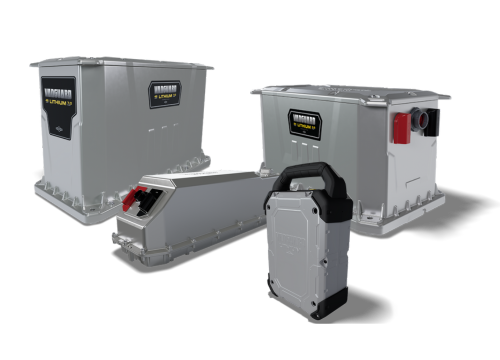
When working with lithium-ion batteries—like Vanguard batteries—you’ll often hear terms like watts, watt-hours, kilowatts (kW), and kilowatt-hours (kWh). These terms sound similar but refer to very different things: one is power, the other is energy.
A watt is a measure of instantaneous power — the rate at which energy is being used or produced.
Determines what loads it can handle at once (performance).
1 kilowatt (kW) = 1,000 watts (W).
Simply put: “A watt is a measurement of power, so think of it like horsepower... It’s the amount of work being done at a moment in time.”
A watt-hour is a measure of energy capacity — how much energy is stored or consumed over time.
1 kWh = 1,000 Wh = using 1,000 W for 1 hour (or 500 W for 2 hours, etc.)
Simply put: “A watt-hour is using a watt for an hour… like running at 10 kilometers an hour — you’ve traveled 10 kilometers after an hour.”
| Term | Unit | What it measures | Analogy |
|---|---|---|---|
| Watt (W) | Power | Instantaneous power rate | Horsepower / speedometer |
| Watt-hour (Wh) | Energy | Stored or consumed energy | Fuel tank / distance traveled |
When sizing or selecting a lithium-ion battery like Vanguard NMC, both values are equally important:
🔋 kWh (energy) tells you how long your equipment can run (battery capacity).
For instance:
“You might need 10 kWh of energy for your application, but only 1 kW of power at any time.”
Discover how a Battery Management System (BMS) boosts safety, protection, extends lifespan, and optimizes performance in every Vanguard Li-Ion battery
Charge Vanguard Li-Ion batteries the right way: follow the 20–80% rule to reduce stress, extend life cycle, and maintain a peak performance.
Learn essential Li-Ion battery maintenance tips: proper charging, storage, and inspection to extend lifespan and ensure optimal performance.