

What is the difference between kW and kWh?
Distinguish kW (power) from kWh (energy) in batteries. Understand their impact on Vanguard lithium-ion battery performance.
1 min read
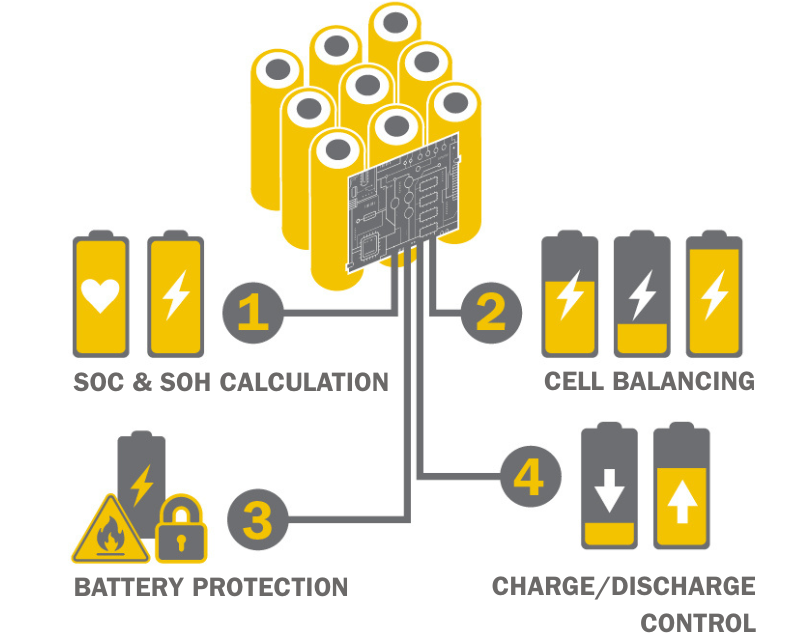
BMS are electronic control circuits (PCB or module) that oversee various characteristics of the battery, including battery type, voltages, temperature, capacity, state of charge (SOC), power consumption, remaining operating time, and charging cycles.
The primary task of a BMS is to ensure the optimal use of the residual energy present in a battery, protecting it from deep discharge and over-voltage conditions that result from extremely fast charging and high discharge currents.
In multi-cell batteries (auch as Vanguard battery packs), the BMS also provides a cell balancing function to ensure that all cells charge and discharge uniformly.

Continuously monitors individual cell voltages to prevent overcharging and overheating.
Precisely regulates current flow to prevent overcurrent conditions that can damage the battery and compromise safety.
Maintains safe operating temperatures, preventing overheating and thermal runaway.

Uses advanced algorithms to accurately estimate the remaining capacity of the battery, providing users with precise information about available energy.
Maintains safe operating temperatures, preventing overheating and thermal runaway.
Ensures uniform charging and discharging of all cells in a multi-cell battery pack, enhancing performance and extending battery life.


CELL BALANCING

BATTERY PROTECTION

CHARGE / DISCHARGE CONTROL
Distinguish kW (power) from kWh (energy) in batteries. Understand their impact on Vanguard lithium-ion battery performance.
Learn essential Li-Ion battery maintenance tips: proper charging, storage, and inspection to extend lifespan and ensure optimal performance.
Discover how Vanguard batteries use CAN-bus with the J1939 standard for real-time communication, system integration, and smart performance control.