

Fuel Recommendations
Find out what fuel we recommend using for your 2 and 4 stroke commercial engines so that they perform better and last longer.
2 min read
Fuel tanks are designed to keep your engine's fuel clean, vented and secure. If you spot debris in the tank or leaking gasoline, it's time for fuel tank maintenance. Never attempt to repair a damaged tank. It poses a risk of leakage, fire or fuel contamination. If you're replacing a fuel tank, use only parts recommended by the engine manufacturer. These parts will attach securely to your engine in the space provided.
Many fuel tanks are designed to use a vented fuel cap to prevent a vacuum from forming in the fuel line. If fuel is leaking from the cap, a properly fitted replacement cap can solve the problem.
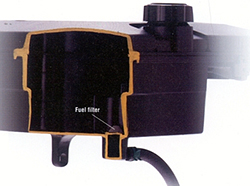 Fuel tanks must be constructed of a non corrosive material or coated with a corrosion-resistant layer to protect against the damaging effects of water, alcohol and salt. If the tank is designed to deliver fuel through a fuel line, a convex fuel filter may be located at the base of the tank, where fuel from the tank enters the fuel line. A filter can also be located outside the tank, midway along the fuel line.
If your tank must sustain excessive vibrations, you can install a labyrinth-equipped tank on some models. The labyrinth, available from your authorized dealer, contains a set of baffles and/or a foam insert to reduce the sloshing and vaporization of fuel.
Service part numbers for the fuel tank are located in the operator's manual. It's important to note that your engine part list lookup typically requires the complete Model number and six character Type number. (Example: 12H702-0505-E1).
In order to view the correct Illustrated Parts List and determine the part numbers for your specific engine, you will need your engine's complete Model, Type, and Code numbers.
Find out what fuel we recommend using for your 2 and 4 stroke commercial engines so that they perform better and last longer.
Engine problems can be linked to maintenance issues such as stale fuel, dirty air filter, fouled spark plug, and deteriorated oil. Learn more!
A bad valve can cause the engine to lose power and fuel efficiency. Here are some ways you can maintain engine valves.